
Vérification de l’âge
Confirmez que vous avez 18 ans ou plus pour entrer dans la boutique.
Veuillez patienter...
Vous n’êtes pas encore assez âgé pour visiter la boutique.

Have you ever heard of Rapé (pronounced "ha-PAY" or "Ha-Peej")? This traditional snuff tobacco from the Amazon is gaining recognition worldwide and is much more than just a stimulant. It is an ancient shamanic powder deeply rooted in the culture and spirituality of various indigenous tribes. At Novus Fumus, we offer carefully selected Rapé, traditionally used in spiritual contexts and ceremonies. In this article, we will dive deeper into the world of Rapé: its origins, preparation, use, and significance within Amazonian cultures.

Rapé is a carefully composed blend of different plant-based ingredients. The base usually consists of wild tobacco (Nicotiana rustica), which is significantly stronger than commercial tobacco. However, there are also Rapé varieties without nicotine. What makes Rapé special is the addition of ash from specific trees, traditionally considered an essential part of the composition. In addition, herbs, seeds, flowers, and sometimes resins are added.
Each tribe has its own recipes, passed down from generation to generation. Some varieties contain only a few ingredients, while others may have more than thirty components. This makes Rapé not only a snuff preparation but also an important ritual tool within Amazonian traditions.
Rapé has a centuries-old history and has been used for generations by indigenous cultures in the Amazon, including Brazil, Peru, Colombia, and Venezuela. It is an integral part of rituals and ceremonies often centered on spirituality, community, and connection with nature. Within these traditions, Rapé is seen as a means to deepen awareness, connect with the spiritual, and strengthen the bond with the natural world.
The tribes of the Amazon live in close connection with their environment and regard everything in the world as interconnected. Rapé aligns with the philosophy of “buen vivir” (good living): living in balance with nature and spirituality, with respect for the earth, which is seen as the source and protector of life.
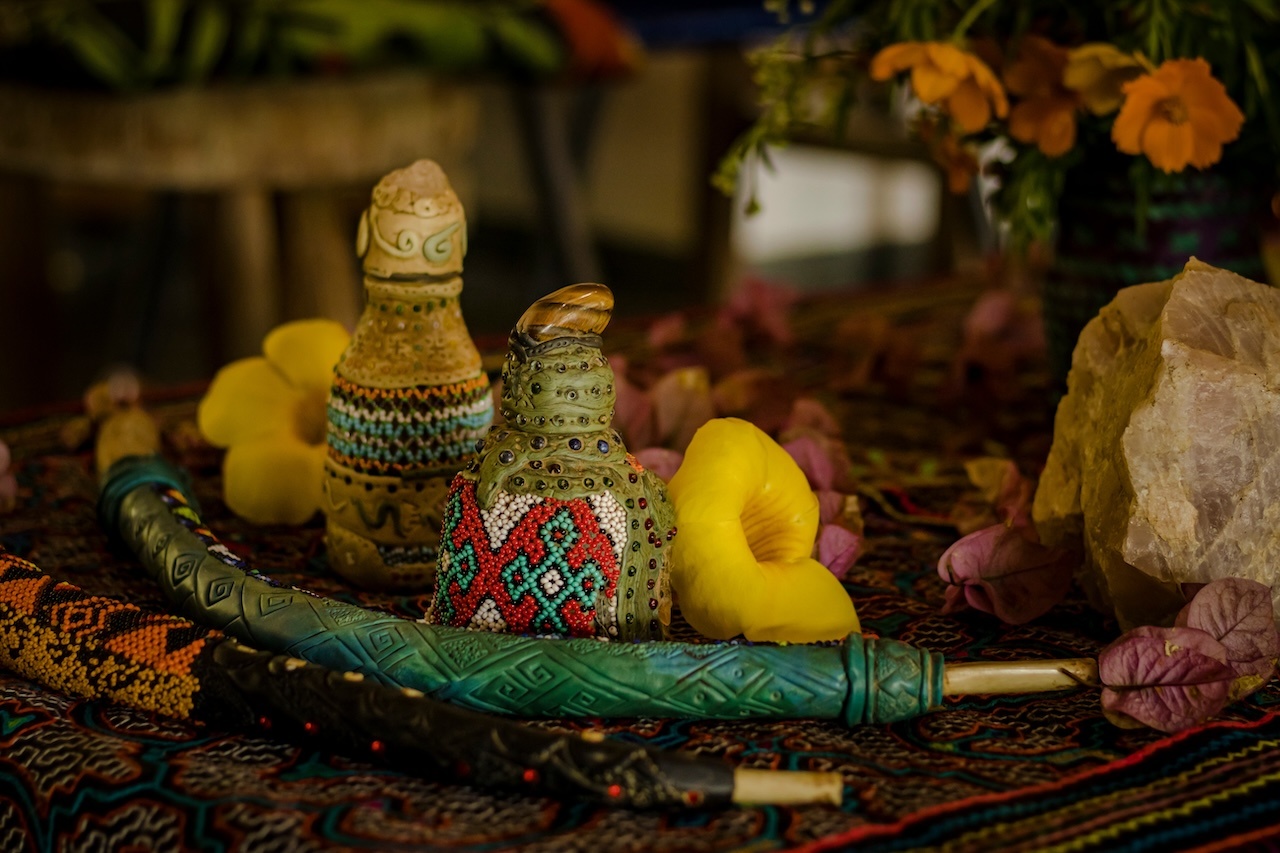
The making of traditional Rapé is seen as an art that often goes hand in hand with strict protocols and ceremonies. It begins with gathering the right plants at the right moment, sometimes under specific moon phases. The leaves of the wild tobacco plant are harvested, dried, and ground into a fine powder. Silence and focus are central to this process, as the preparer’s intention plays an important role in many traditions.
Another essential ingredient is the ash of certain trees, which are considered sacred. This ash is traditionally added as a strengthening element and is said to give Rapé extra power. Preparing good ash requires knowledge and experience: only the bark is burned, as it contains the most valuable components. The mood and intention during this process are regarded as important within the tradition.
Commonly used ashes include: Tsunu (classic among the Yawanawá), Murici, Pau Pereira, Parika, Cacao, Cumaru, Mulateiro, and Canela de Velho.
Rapé is traditionally administered through the nose as snuff powder. This is not done casually, but often in a serious and ritual context using special pipes:
The use of both nostrils is seen within the tradition as a way to bring balance. The experience can be intense, which is why respect and preparation are important.

Experiences with Rapé are often described as versatile and intense. Depending on the composition, the intention, and the sensitivity of the user, different reactions may occur. Within traditional contexts, these reactions are seen as part of the ritual.
Note: these descriptions are based on cultural and experiential contexts. Effects differ per person and per composition.
There are countless Rapé blends, each with its own unique "personality" and purpose. At Novus Fumus, you will find a carefully selected collection of these authentic blends. Here are some prominent tribes and their characteristic Rapé varieties:
The Yawanawá from Acre (Brazil) are known as keepers of shamanic knowledge. Their Rapé is often simple and pure, usually based on tsunu ash, and is an integral part of songs and rituals.
The Huni Kuin, also called “true people,” live in Brazil and Peru. Their worldview, yuxin, regards all beings as ensouled. Their Rapé is known for its diversity and symbolism, often used alongside ayahuasca and the geometric kenê patterns.
The Kuntanawa, who have largely restored their traditions after the rubber era, often use Rapé in combination with ayahuasca. Their blends are regarded as ritual tools to open inner pathways.
The Nukini are distinguished by the role of women in the preparation of Rapé. Their blends often contain unique combinations of plants, seeds, and ash, and are known for their diversity.
The Shanenawa from Acre are known for their singing and ritual traditions. Their Rapé is often used within community rituals and spiritual contexts.

Although Rapé plays an important role within traditional contexts, it is essential to use it responsibly and with caution. There are situations where Rapé should not be used or where extra care is required:
At Novus Fumus, you will find carefully selected Rapé. Our products are chosen with a focus on authenticity and tradition, ensuring you a reliable experience. With fast and secure delivery, you can start your ritual or spiritual journey quickly. In addition, we are here with personal service to answer your questions about Rapé and its use.
Rapé has been part of the spiritual traditions of indigenous Amazonian tribes for thousands of years. Its use is connected to culture, community, and the experience of nature. By learning more about the different tribes and their unique varieties, we gain a deeper understanding of this rich heritage and the philosophy of buen vivir (“good living”). Respecting its origins, using it with the right intention, and practicing caution are essential for a meaningful experience.
Discover the world of Rapé at Novus Fumus today!


Livraison gratuite à partir de 300 € vers le reste du monde.

Toujours emballé discrètement et expédié rapidement. Personne ne voit ce qu’il y a à l’intérieur, sauf vous.

Contactez-nous ! Disponible 7 jours sur 7

Les clients nous évaluent avec un 8,9 sur Kiyoh